
Overview
Inquiry Templates in Persona support version management, allowing you to draft, publish, and maintain multiple versions over time. This enables safe iteration, controlled releases of changes, and the ability to audit or revert prior configurations as needed.
| Persona Object | Object ID syntax | Object ID versioning syntax |
|---|---|---|
| Inquiry Template | Begins with itmpl_ | Begins with itmplv_ |
Draft and publish
When you update an Inquiry Template, Persona creates a draft version. Drafts allow you to make incremental changes and save progress before committing those changes live. You can edit a draft multiple times. Once you are satisfied with your changes, publishing the draft will create a new version of the Inquiry Template.
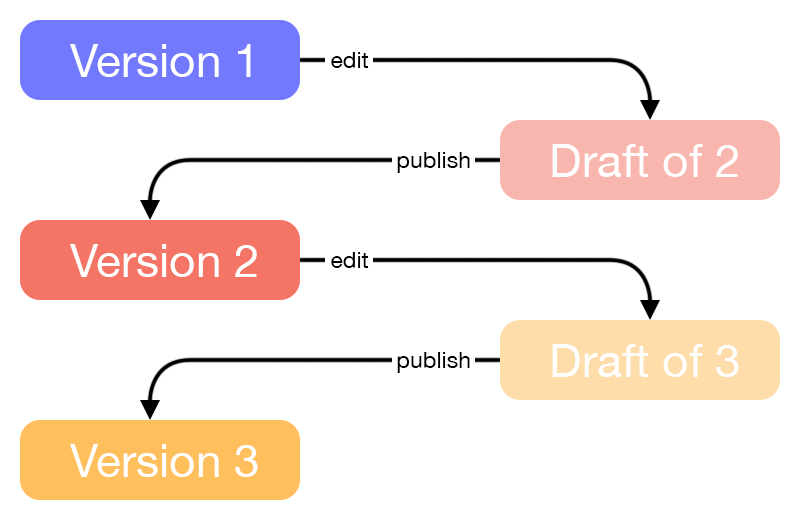
Publishing locks the version. You cannot edit a published version. New Inquiries use a published version only after you deploy it to an environment with the Deployment Manager. To publish and deploy in one step, select environments in the Deploy this version (optional) field of the Publish version? dialog. To make more changes, create a new draft from any existing version.
When you publish, you can add a publish note of up to 255 characters. To change the note later, select Edit description on the version in Version History.
Inquiry Templates can reference and embed Verification Templates. When you edit an Inquiry Template that includes embedded Verification Templates, any configuration changes to those embedded templates are automatically captured as part of the Inquiry Template’s draft.
In this way, an Inquiry Template can have many Inquiry Template versions associated to it. Each environment uses a maximum of one deployed version of an Inquiry Template at a time. Sandbox and Production can use different versions. There can also be one draft version that you are editing.
Live version behavior
A published version is live when it is deployed to at least one environment. Version History shows a Deployed label on the versions that are deployed. Each new Inquiry uses the version that is deployed to its environment when the Inquiry is created. If no version is deployed to that environment, Persona does not create the Inquiry.
- Each Inquiry is permanently linked to the version of the Inquiry Template that was deployed to its environment when it was generated.
- When you deploy a different version, new Inquiries use that version. Inquiries that already exist continue to reference the version from which they were created.
- This ensures that existing Inquiries maintain their integrity and are not affected by changes made to newer template versions.
Version history
All published versions of an Inquiry Template are recorded in Version History. This provides a full audit trail of changes over time.
How do you view Version History?
-
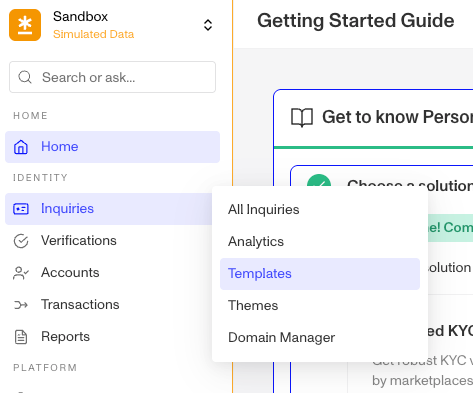
Navigate to the Dashboard, and click on Inquiries > Templates.
-
Select the Inquiry Template you want to review.
-
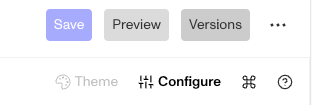
Click ··· to open the overflow menu, then click Version History.
-
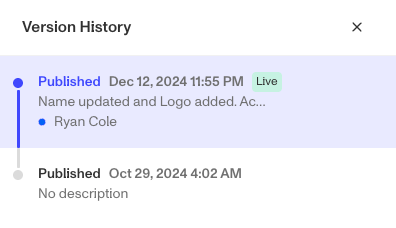
The Version History side panel opens on the right.
Reverting to a previous version
- To roll back, open the Deployment Manager and deploy an earlier published version to the environment.
- To edit from an earlier version, click ··· next to that version in Version History and select Restore. Restore creates a new draft from that version and opens it in the editor. Restore does not publish or deploy anything. Publish the draft, then deploy it.
- Restore does not change the content of earlier versions. Existing Inquiries that are linked to earlier versions are not affected.
Compare to latest version
In the case that you want to check for changes between the current version of the inquiry template and a previous version, the Compare to latest version feature allows that.
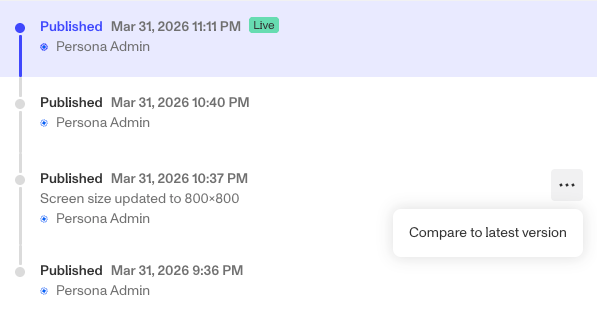
Steps:
- With the Version History side panel open, click ··· at the right of a previous version.
- Click Compare to latest version.
What if you want to compare two previous versions against each other?
This is not directly supported, but you can use a workaround. Select Restore on one of the previous versions. This creates a draft, which becomes the latest version. Then compare the other previous versions against it. When you finish, click ··· > Discard Draft to discard the draft.